Why workforce logistics are becoming a bigger operational issue on UK infrastructure projects

Why workforce logistics are becoming a bigger operational issue on UK infrastructure projects
Accommodation is rarely the first problem anyone talks about on an infrastructure project.
At the start of the project, the arrangement usually feels straightforward enough. Rooms are booked where they are available, teams travel in and out of site, and the programme gets underway. It is often later, once the job becomes more demanding, that the pressure starts to show and the impact is felt on site.
When accommodation starts to affect delivery
It might be that part of the project overruns, weekend working is then added at short notice, or a utilities scheme moves into a more intensive phase than planned. It might also be that specialist engineers who were expected on site for a few nights suddenly need to stay for several weeks, and teams that initially fitted into one accommodation arrangement end up spread across multiple locations.
At that point, accommodation starts to affect how the project runs day to day.
Growing pressures on labour and accommodation
Across infrastructure, rail, water, highways and energy, workforce logistics are becoming harder to manage than many contractors were dealing with, even a few years ago. The wider labour picture is a significant part of that.
The Construction Industry Training Board estimates that the UK construction sector will need more than 250,000 additional workers by 2028 to meet forecast demand. At the same time, infrastructure investment is continuing across transport, utilities and energy, with AMP8 expected to deliver approximately £104bn of investment across the UK water sector between 2025 and 2030.
In practical terms, more projects are competing for the same engineers, supervisors and specialist subcontractors, often in regional or remote locations where local accommodation is already limited before works intensify.
That pressure is also feeding into the temporary accommodation market.
On major infrastructure and remote works, contractors are increasingly competing for a limited pool of sleeper accommodation, temporary living facilities, and suitable local hotel space, particularly during peak delivery periods when several large programmes are running at once. In some areas, availability becomes difficult well before projects reach their busiest phase.
The impact of fatigue and inconsistent routines
Most contractors recognise the pattern once works start accelerating. Initially, teams are staying reasonably close to site and the travel feels manageable, then availability starts to change. One engineering crew is half an hour away. Another is nearly an hour away because there are no rooms left closer to the works. To manage this, someone in operations or logistics ends up spending more time reorganising accommodation around changing schedules than anyone expected.
None of this looks especially dramatic in isolation, which is why it often goes unnoticed for quite a long time.
It shows through people leaving site earlier than they otherwise would because they still have a long journey ahead of them. Delayed shifts become harder to cover at short notice, and overnight works are harder to coordinate when teams are spread across several location and travelling different distances each day. Once delays start, there is less flexibility left to get back on track.
On remote infrastructure projects, engineers and supervisors travelling an hour or more between accommodation and site is not unusual. Government planning linked to major UK infrastructure projects already uses travel catchments of up to 60 minutes when assessing labour and accommodation requirements, which shows how normalised long-distance workforce travel has become in parts of the sector.
Fatigue is part of this too, although it is not always discussed openly on projects.
The Health and Safety Executive has repeatedly identified fatigue as a concern across safety-critical industries, particularly where long hours, irregular shifts and extended travel combine. Research linked to fatigue in construction environments has shown impacts on concentration, reaction times and decision-making.
By the middle of the week, people are more tired than they were on Monday. Teams are less flexible around changing shifts, and jobs already under delivery pressure become harder to pull back once delays begin to build. It is rarely attributed directly to accommodation, but experienced project teams understand how quickly travel and inconsistent routines start affecting the wider operation of a site.
A lot of the productivity conversation in construction rightly focuses on labour shortages, planning, materials and technology. Yet, on live infrastructure projects, challenges are often escalated by smaller operational issues that are harder to measure and need to be flagged and addressed earlier in the project.
Travel time is one of them. Changing accommodation arrangements are another. Supervisors spending time dealing with workforce logistics rather than delivery is another.
Over a long programme, these challenges can make jobs harder to coordinate efficiently, particularly across remote, phased or operationally complex works where specialist teams need to remain available.
That is why accommodation is becoming a more operational discussion across infrastructure and utilities projects.
Why accommodation is becoming an operational decision
Hotels still work well on many jobs, and large accommodation compounds remain the right answer for others. But there is a growing number of projects sitting somewhere between those two models. Rail possessions, remote utilities works, phased infrastructure programmes and specialist engineering projects where contractors need personnel close to site without building large-scale accommodation setups around them.
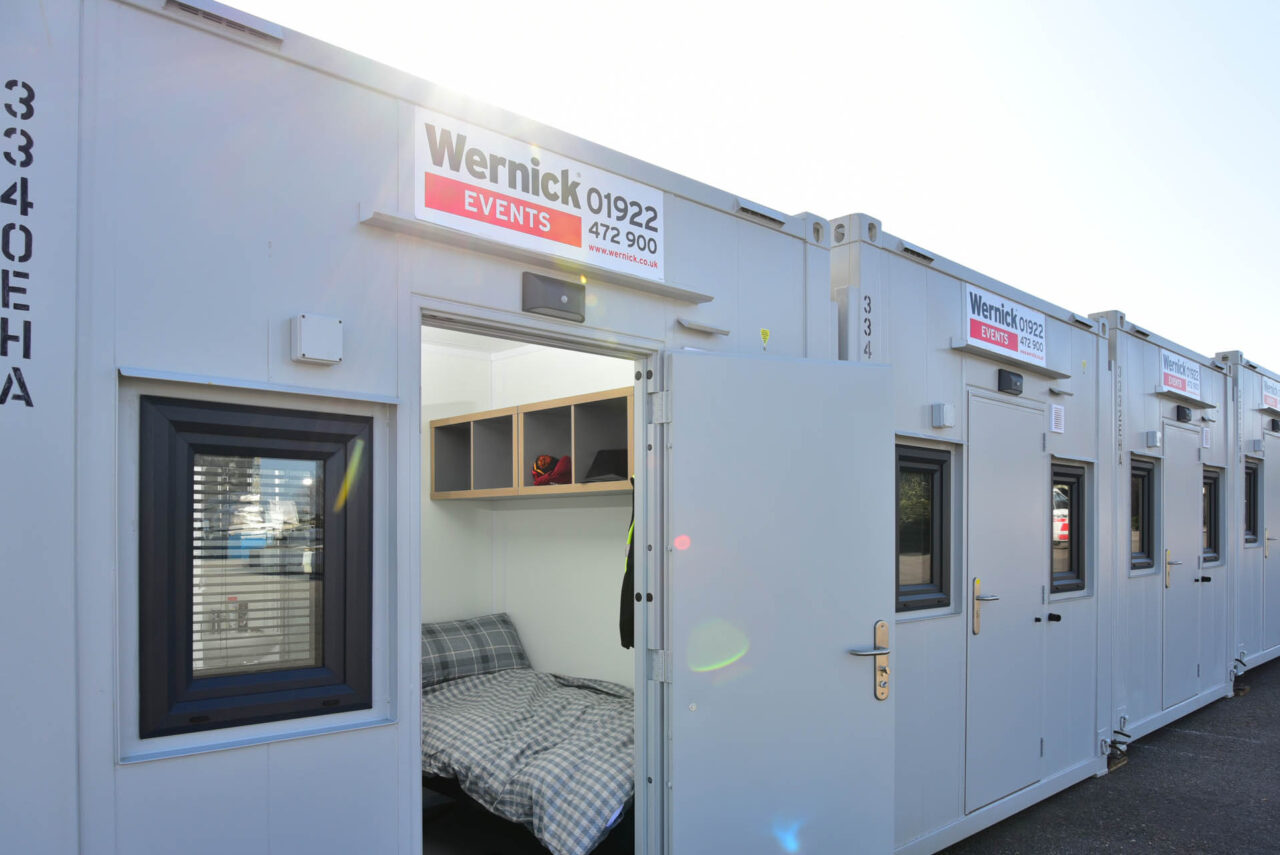
Increasingly, those projects are looking for accommodation solutions that can be adapted to different workforce requirements, whether that is accommodation for individual engineers and supervisors, shared accommodation for site teams or larger self-contained units for longer-duration programmes.
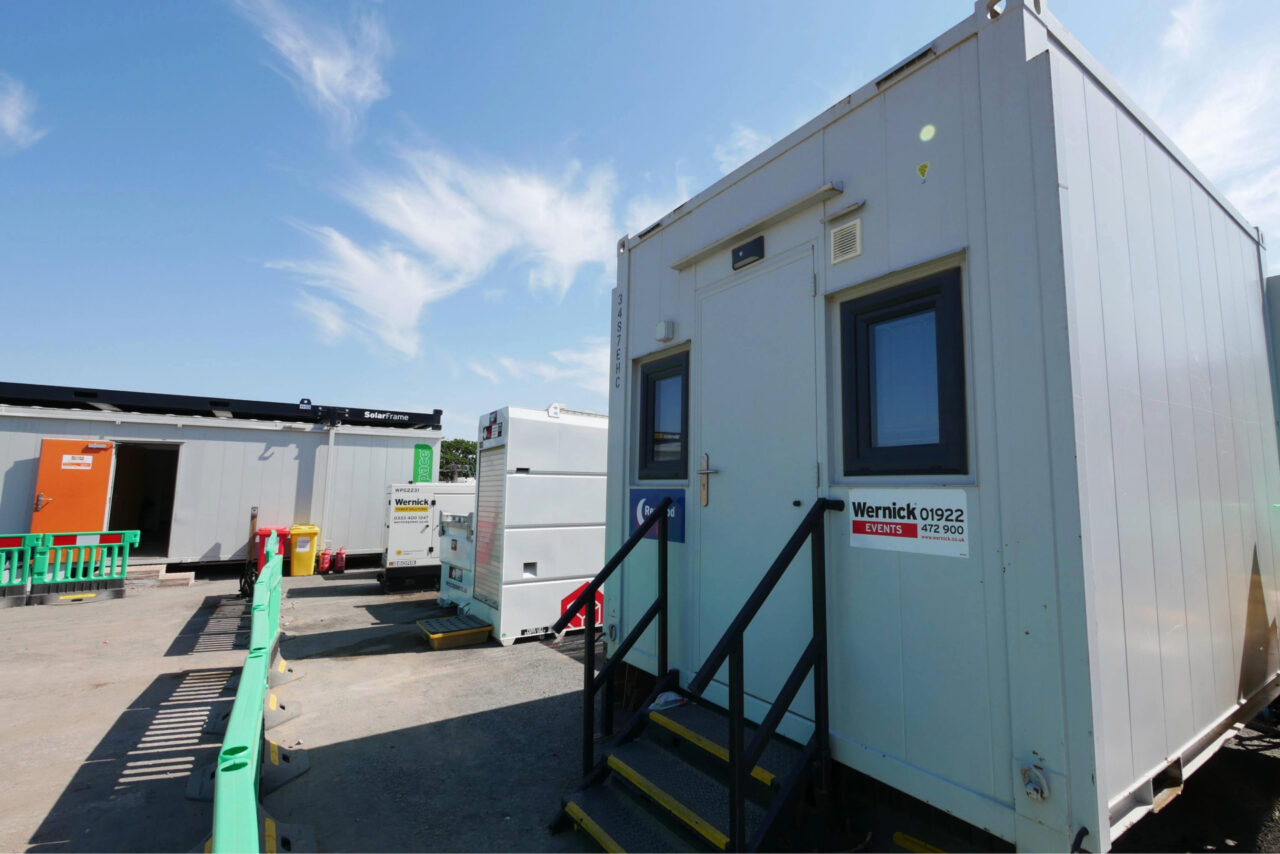
It is one of the reasons Wernick has developed RestPod – to support projects where travel, accommodation availability and changing site conditions are starting to create operational challenges around delivery.
Those are the environments where workforce logistics are starting to matter much earlier in the life of a project than they traditionally have, and where accommodation is becoming a more strategic operational consideration rather than simply a welfare requirement.