Project Scenario: RestPod Accommodation for Remote Infrastructure Projects
Reducing travel pressure on a remote infrastructure project
A major contractor working on a long-duration water infrastructure project in a remote part of the UK was managing teams travelling significant distances between accommodation and site each day.
Hotel availability in the surrounding area was limited, and teams were spread across multiple locations, making the project harder to manage operationally once schedules started changing.
As works progressed, travel time was beginning to affect:
- shift flexibility
- available working time
- workforce coordination
- day-to-day site management
The project needed a more practical accommodation setup that could keep key teams closer to site without building out a full accommodation compound, while retaining the flexibility to accommodate different personnel requirements as the programme evolved.
- Scenario: Remote water infrastructure project
- Environment: Remote UK location
- Sector: Water and infrastructure
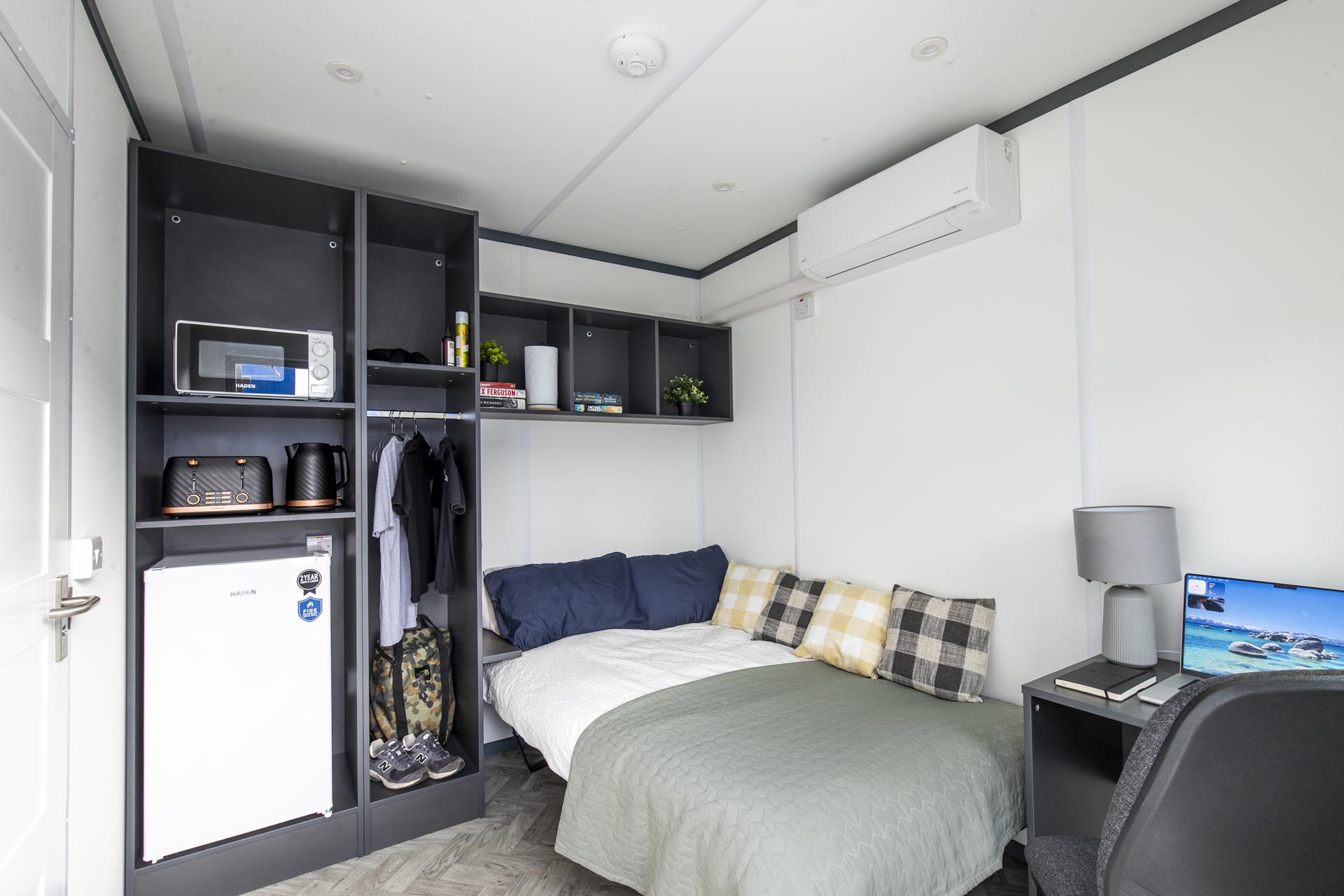
- Accommodation type: Solo, Twin and Luxe RestPods
- Typical users: Project teams, specialist contractors and shift workers
The challenge
The site was operating in a location where:
- accommodation options were limited
- travel times were inconsistent
- project schedules were regularly changing around live works and delivery pressures
Early starts and changing shifts were becoming increasingly difficult to manage with teams travelling long distances every day.
The contractor also needed a setup that could:
- deploy quickly
- adapt around changing project phases
- support specialist teams working across the programme

The RestPod approach
The RestPod range provided a flexible on-site accommodation setup for key personnel working across the project, allowing accommodation to be matched to different roles and project requirements as works progressed.
The setup gave the contractor:
- private accommodation close to site
- reduced daily travel time
- greater flexibility around changing shifts
- a simpler operational setup during key stages of the programme
Because the project was operating remotely, wider Wernick infrastructure support and temporary power capability could also be integrated where required.

The outcome
Keeping key teams closer to site helped reduce some of the operational pressure caused by constant travel and fragmented accommodation arrangements.
As works intensified, coordinating shifts and overnight access became easier to manage with teams based closer to site.