Circular economy in modular construction
A smarter, more sustainable approach to refurbished modular buildings.

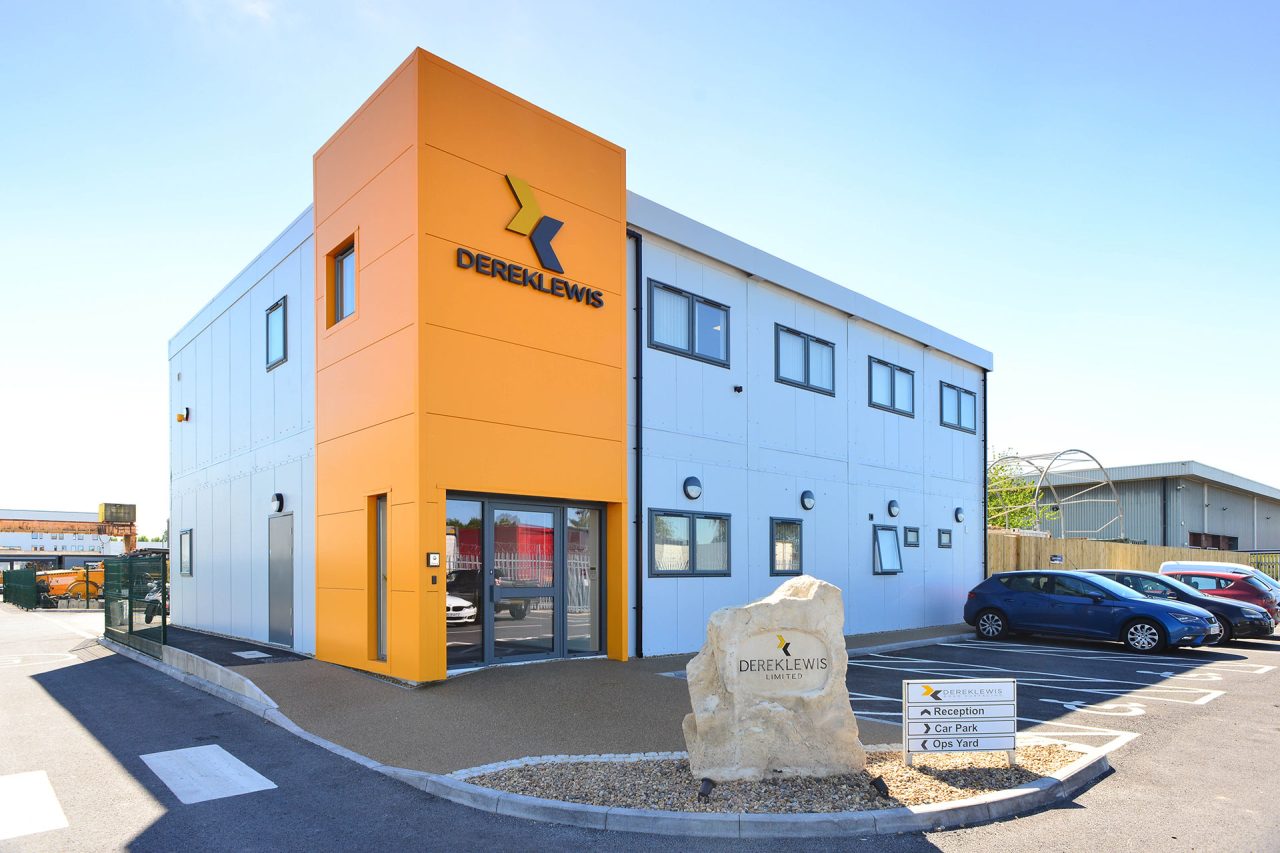
At Wernick Refurbished Buildings, circular economy principles are embedded in our approach to modular construction.
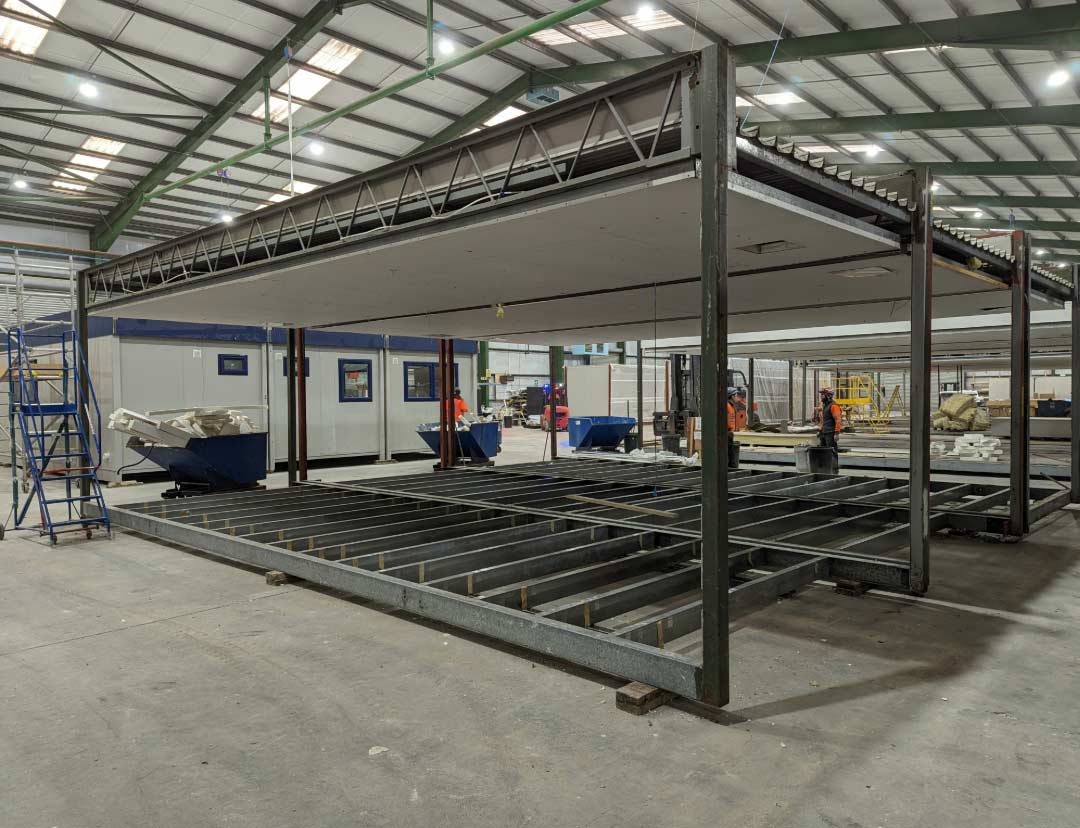
Rather than demolishing and rebuilding, we extend the life of existing modular buildings by retaining and repurposing the structural steel frame, the most carbon-intensive element of the structure. The building is then refurbished to modern standards, creating high-quality space with significantly reduced material waste.
This is not reuse for the sake of cost. It is a deliberate, responsible approach to construction.
What does circular construction mean?
In traditional construction, buildings are often demolished at end of life, with materials discarded and new resources consumed.
A circular approach is different. It focuses on:
- Extending the life of structural materials
- Reducing waste
- Lowering embodied carbon
- Designing for longevity and adaptability
Within modular construction, this approach is particularly effective because buildings are manufactured components that can be carefully dismantled, assessed and rebuilt.
Why steel frame retention matters
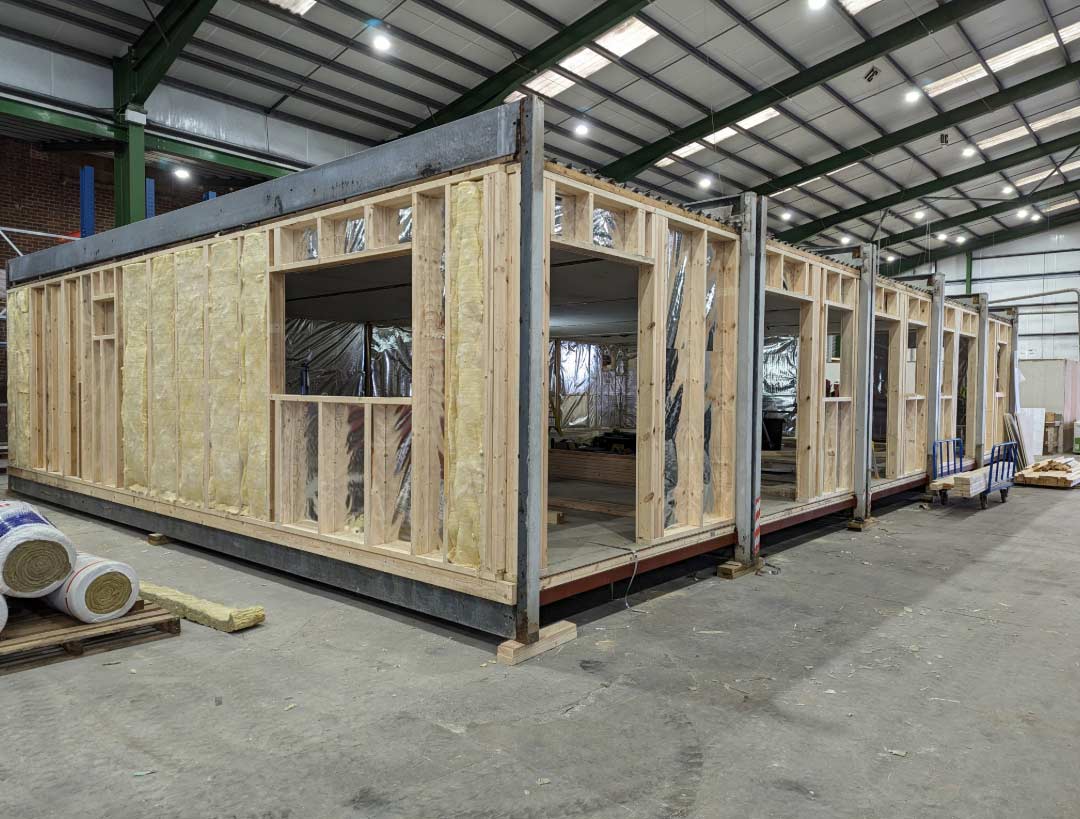
The structural steel frame represents a significant proportion of a modular building’s embodied carbon.
By retaining and reusing this core structural element, we:
- Reduce demand for new raw materials
- Minimise construction waste
- Lower embodied carbon compared to new modular builds
- Extend the service life of valuable structural components
Everything above the steel frame, insulation, finishes, services and layout, can be upgraded, reconfigured and modernised. This allows us to deliver a building that performs like new while reducing environmental impact.
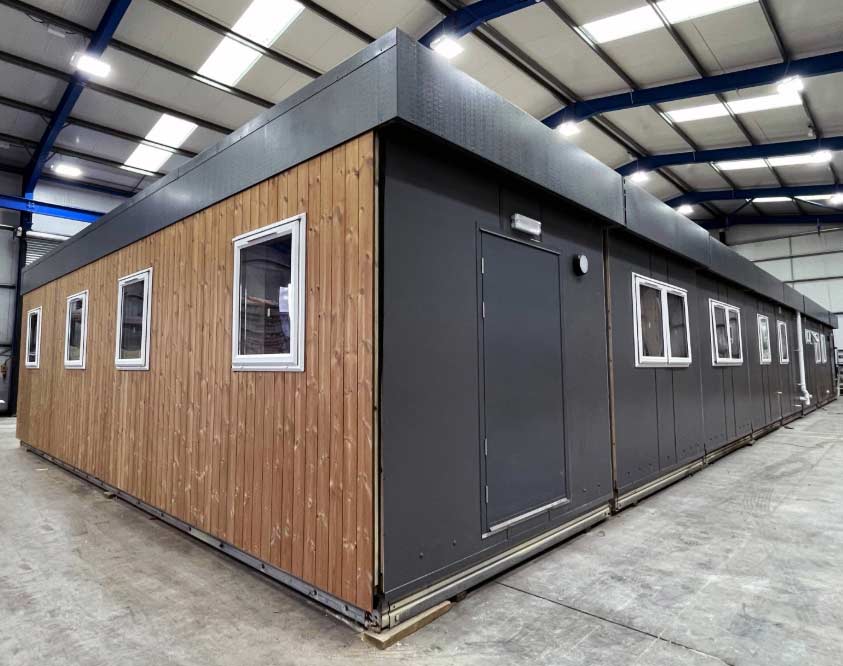
Our refurbishment process goes far beyond surface-level upgrades.
Each building is:
- Stripped back to its structural steel frame
- Thoroughly inspected and assessed
- Re-engineered and strengthened where required
- Rebuilt with upgraded materials and services
- Finished to modern performance and compliance standards
The result is a durable, high-quality modular building designed for its next lifecycle.
Supporting carbon reduction & ESG objectives
Sustainability is increasingly central to procurement decisions across education, healthcare, commercial and infrastructure sectors.
Refurbished modular buildings support:
- Carbon reduction strategies
- Responsible procurement policies
- ESG reporting requirements
- Waste minimisation targets
- Circular economy commitments
By choosing refurbishment over new construction, organisations make a measurable step toward more sustainable building practices.
Extending the life cycle of modular buildings
Modular construction is inherently suited to circularity. Buildings are manufactured in controlled environments and designed as repeatable units, making them ideal candidates for refurbishment and reconfiguration.
Through careful assessment and re-engineering, we extend the life cycle of modular buildings, reducing the need for new material production and preventing unnecessary demolition.
This approach reflects a shift from linear construction (build–use–dispose) to a circular model (build–use–refurbish–reuse).
Aligned with Wernick’s sustainability strategy
Refurbishment plays a key role in supporting Wernick Group’s wider sustainability commitments, including its net zero 2040 ambition.
By embedding circular principles into modular construction, we are contributing to a lower-carbon, more resource-efficient built environment across the UK.

A practical path to circular construction
Circular economy principles must be practical to be effective.
Refurbished modular buildings demonstrate that sustainability and quality can work together. Clients benefit from:
- High-performance buildings
- Faster delivery programmes
- Cost efficiency
- Reduced environmental impact
Refurbishment is not a compromise. It is a strategic choice that balances performance, value and responsibility.