Putting load on power: How load banks keep your backup systems reliable
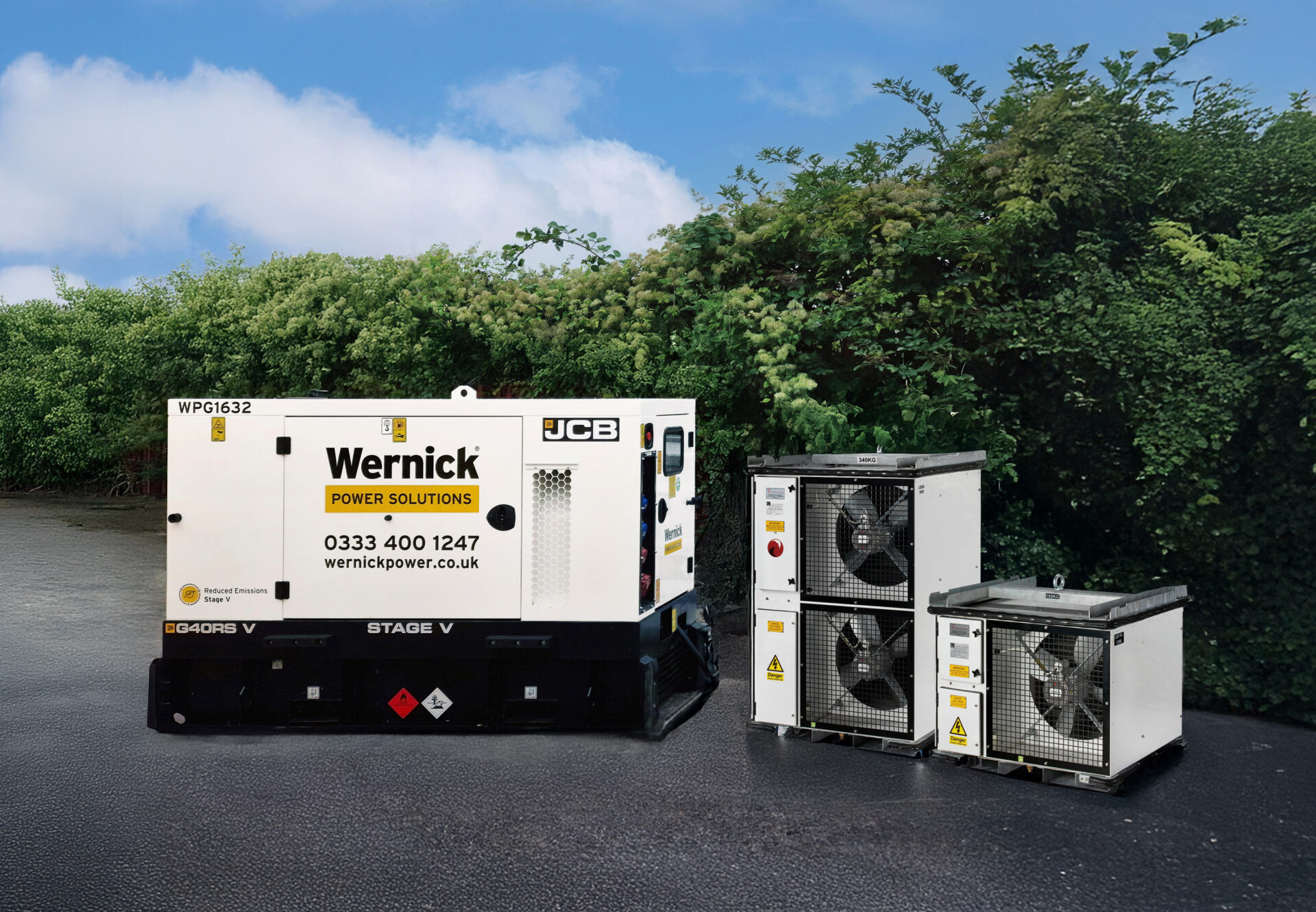
In high-stakes environments like construction sites, temporary facilities and modular buildings, backup power must do more than just switch on; it must perform flawlessly when needed most. Load banks ensure your generator can handle real-world demand, making them an essential component of Wernick Power Solutions’ commitment to reliable power.
What Is a load bank test?
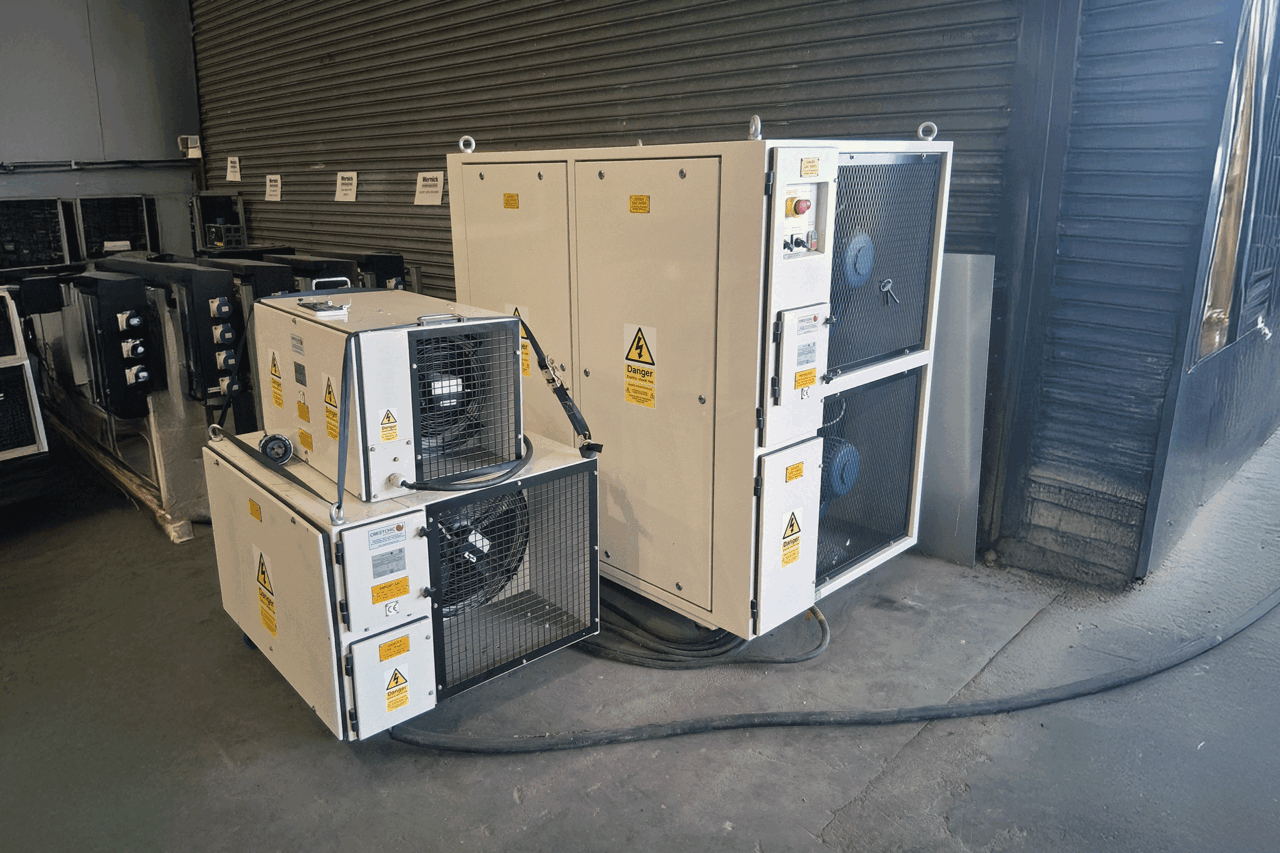
A load bank test is a preventative maintenance procedure that simulates real-world demands. Essentially, it performs a stress test for your backup power systems (generators, UPS, etc.). Instead of waiting for a real outage, which may be the first time a system runs under full demand, a load bank allows you to apply a controlled electrical load in a safe, predictable way.
By doing so, engineers can verify how well the system handles voltage, frequency and power output under realistic conditions, and identify any weak points before they become a problem during a real event.
Why are load banks necessary?
Preventing “wet stacking”
Diesel generators that run for long periods at low load can suffer from a phenomenon called wet stacking, where unburned fuel accumulates in the exhaust system. This leads to poor combustion, carbon build-up, and reduced efficiency.
Running periodic load bank tests helps the engine reach higher temperatures and burn off those deposits, protecting long-term performance.
Reliable performance / commissioning
When you commission a new generator or UPS, a load bank lets you “prove out” the system under full capacity or at various realistic loads. This gives confidence that the equipment will perform when needed.
It also helps uncover any faults that only show up under stress. For example, in the cooling, fuel, or control systems.
Preventative maintenance
Rather than waiting for a failure, regular load bank testing is a proactive way to maintain your ‘stand-by’ power solution. It can highlight degradation or faults early on, giving you time to fix them before a real outage.
This kind of scheduled maintenance helps extend the life of the generator, and ensures that your engine, alternator and other subsystems remain healthy.
Safety and risk mitigation
Building a “real” load (physically wiring up devices to draw power) can be labour-intensive and costly. Load banks, by contrast, provide a controlled and engineered way to apply load, complete with protections for overcurrent, overheating etc.
In short: they simulate real-world electrical conditions in a far safer and more predictable way.
Regulatory / compliance reasons
For many industries (data centres, healthcare, construction, etc.), proving that backup systems are regularly tested and reliable isn’t just best practice, it may be required by regulation, insurance or audit processes. Load bank tests provide documented proof of capability and resilience.
How Wernick Power Solutions’ load banks stand out
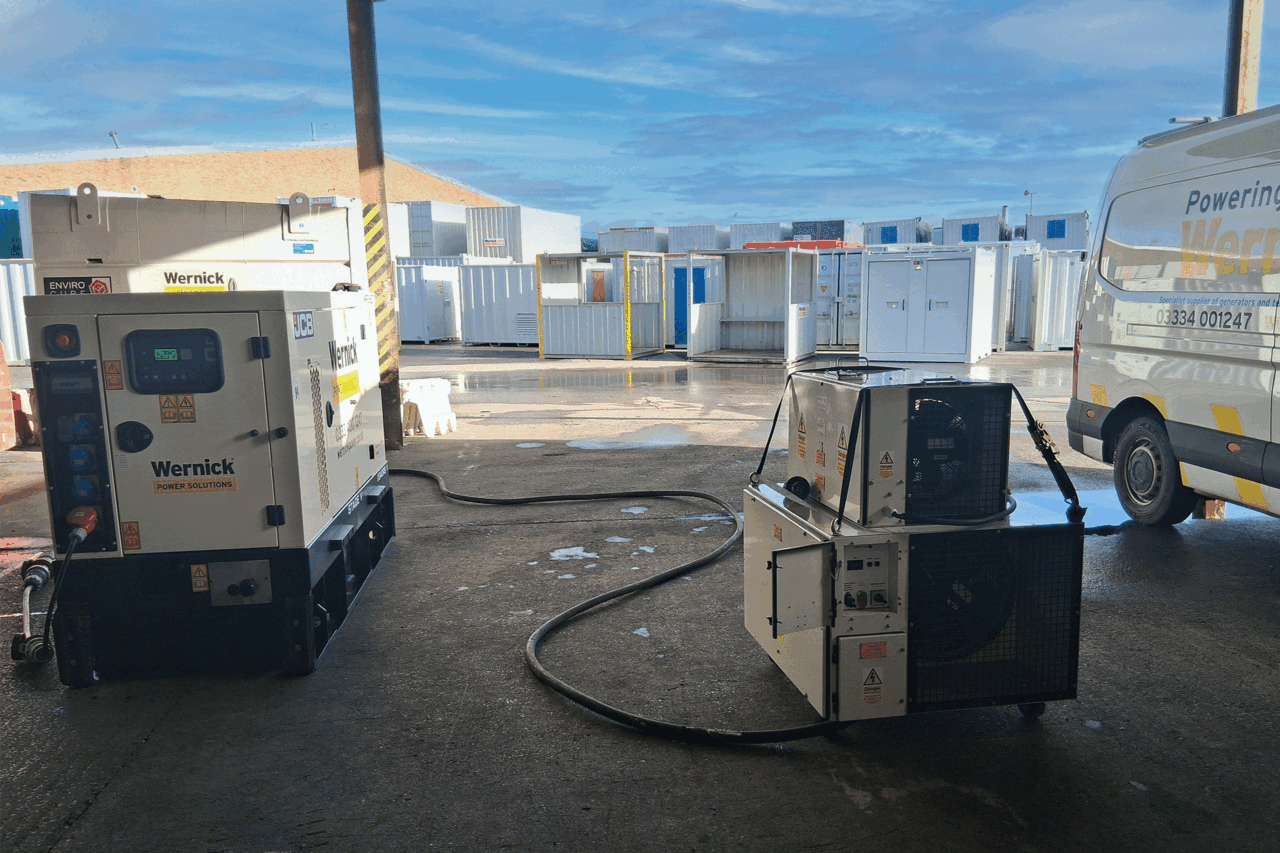
Wernick Power’s load bank service is engineered to do much more than just switch on and test. It delivers accuracy, adaptability and performance that reflects real-world conditions. Some of the standout advantages include:
- Variable load simulation (1%–110%): Wernick’s load banks can simulate loads from very low (1%) up to slightly above rated (110%), allowing for very tailored testing.
- Resistive and reactive options: They offer both resistive-only load, and reactive (inductive) load. This is critical: resistive-only tests stress the engine, while reactive (or combined) tests more accurately simulate real building loads (often lagging power factor).
- Single and three-phase flexibility: Our load banks support different phase configurations, making them usable for a wide range of systems.
- Secure and portable: Road-towable options mean Wernick can bring testing equipment to your site. Lockable canopies provide security, especially in remote or sensitive locations.
- Calibration and accuracy: Wernick calibrates their load banks regularly so that test data is precise and trustworthy.
- Engineer support: You can choose to have a Wernick-trained engineer run the test, or hire the equipment and run it yourself, depending on your capabilities and preferences.
The business value – Why it matters for your organisation
- Reduced downtime risk: By validating that your backup power works under full load, you reduce the risk of generator failure during a real outage, which could have dramatic operational and financial consequences.
- Cost savings over time: Preventative load bank testing can reduce long-term maintenance costs by catching issues early. By avoiding things like wet stacking, you minimise fuel waste, reduced engine life and expensive repairs.
- Confidence and compliance: Whether for peace of mind, stakeholder assurance or regulatory reporting, documented load bank tests offer proof that your systems are not just functional, but resilient.
- Optimised power strategy: Load tests can inform future decisions about capacity, redundancy or system upgrades by showing how your current setup performs under real load.
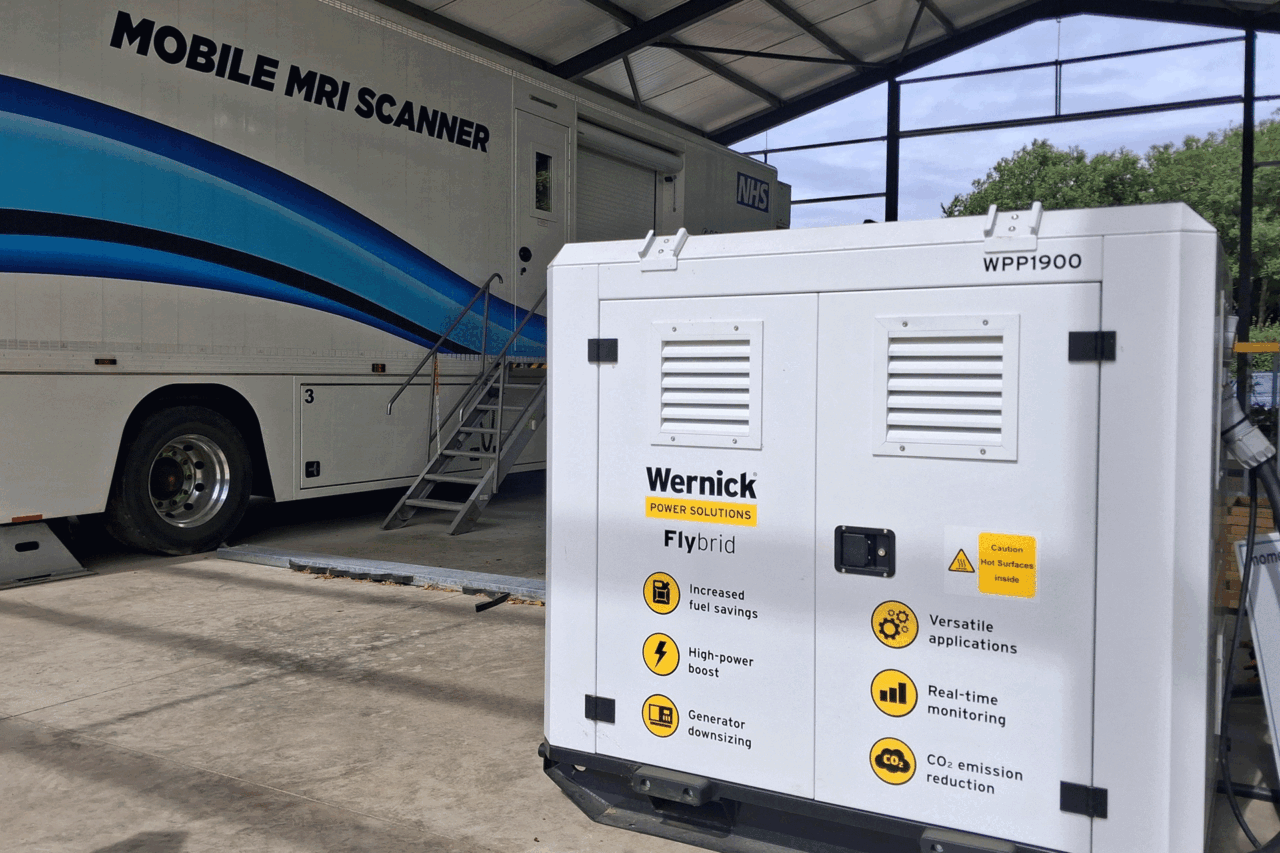
At its core, a load bank isn’t just a piece of test equipment, it’s a vital tool in the ongoing health, reliability, and performance of backup power systems. For Wernick Power Solutions and its customers, regular load bank testing is a cornerstone of proactive maintenance: ensuring that when power is needed, your generator doesn’t just start, it performs.
With Wernick Power’s flexible, calibrated and engineer-supported load bank services, organisations can mitigate risk, extend equipment life and be confident that their critical power systems are truly ready for the moment of truth.